

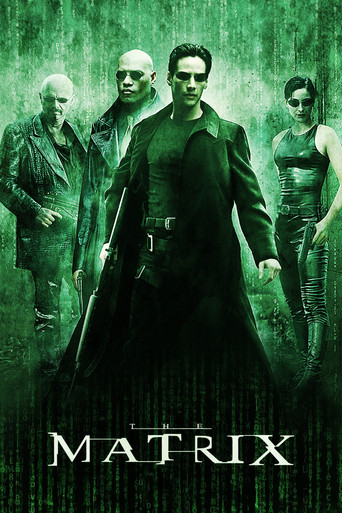
The Matrix
“I was nine years old when I first watched *The Matrix*. It was around the year 2000, in a small village in northern Portugal. Back then, new films travelled by word of mouth rather than through the internet. An older neighbour, around four years older than me, had just bought the VHS and invited me to his house one afternoon. We watched it together on a small television in his living room while eating Maria biscuits with butter. Because I could not yet read subtitles fast enough, he would explain what they said and what he believed the film meant. I barely understood the story, but I immediately knew I was looking at something extraordinary. We watched the film repeatedly—probably six times that month alone. Our games became inspired by *The Matrix*, and I spoke about it to everyone. Afterwards, every Sunday afternoon film on television somehow felt smaller. Looking back, this film planted the seed that would eventually become my lifelong fascination with cinema. It changed how I thought about filmmaking: not only how films make us feel, but how ideas become cinema. Even today, I still revisit it several times every year with exactly the same excitement. Without *The Matrix*, there probably wouldn't be a Parallax. — The Founder”
*The Matrix* (1999) did not simply become a box-office phenomenon; it permanently altered the trajectory of modern action cinema and visual storytelling. Released at the turn of the millennium, the film merged philosophy, cyberpunk aesthetics, and Hong Kong martial arts in a way mainstream audiences had never experienced. Technically, it defined an entire generation and transformed visual effects through the introduction of Bullet Time to mainstream filmmaking. By combining multi-camera arrays with digital interpolation, special effects evolved from spectacle into an expressive cinematic tool. Beyond visual effects, the film established what later evolved into modern gun-fu action choreography, replacing rapid-cut editing with disciplined physical performance. Its influence on cinema, television, and video games has endured for decades. More than twenty-five years later, it remains culturally relevant, representing one of the rare films that permanently changed the language of the medium. Films enter the Parallax Canon because they leave cinema different from how they found it. *The Matrix* did exactly that.